
Industry Living Labs
A series of three workshops bringing together companies, designers, researchers, policymakers, and ecosystem partners to co-design the M-DPP system around real needs and practices in the textile sector.

Opening session — Introducing the Living Lab
Online · 15 December 2025 · 10:00–11:00
The first session introduced the M-DPP project and the broader regulatory context — the EU Ecodesign for Sustainable Products Regulation (ESPR) and the Digital Product Passport requirements coming into force from 2027. The session used an interactive Wooclap survey to capture early perspectives from industry and ecosystem partners on their current understanding of DPPs, their concerns, and their expectations.
Key findings: participants were moderately informed but not yet operationally ready to implement DPPs. Clear concerns emerged around data availability, additional workload and costs, and the tension between supply chain transparency and competitive confidentiality. At the same time, participants identified real opportunities: greater trust in product information, stronger tools against greenwashing, and better support for circular business models.
Discovery workshop — Requirements harvesting
New Order of Fashion, Eindhoven · 2 March 2026 · 13:00–15:00
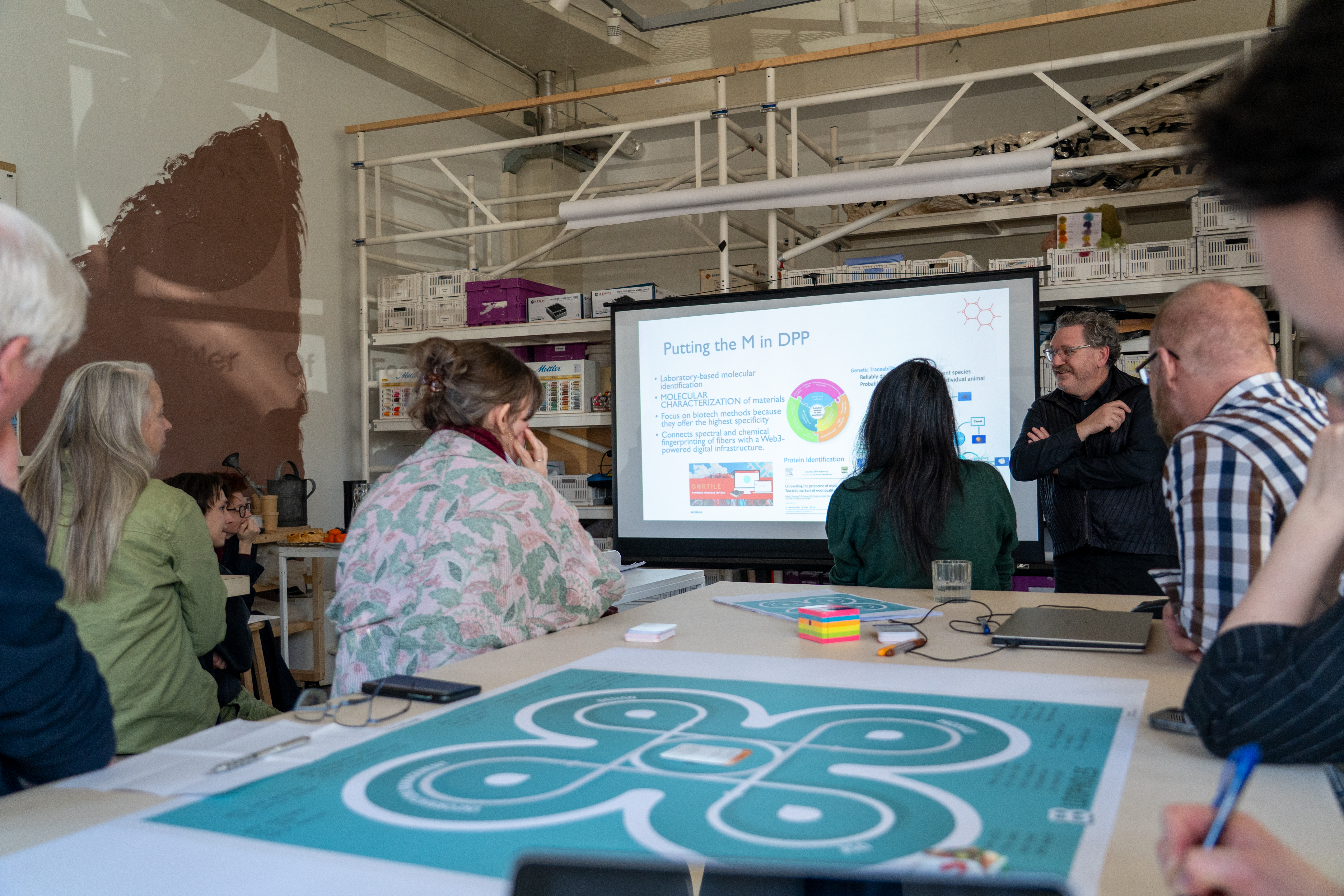
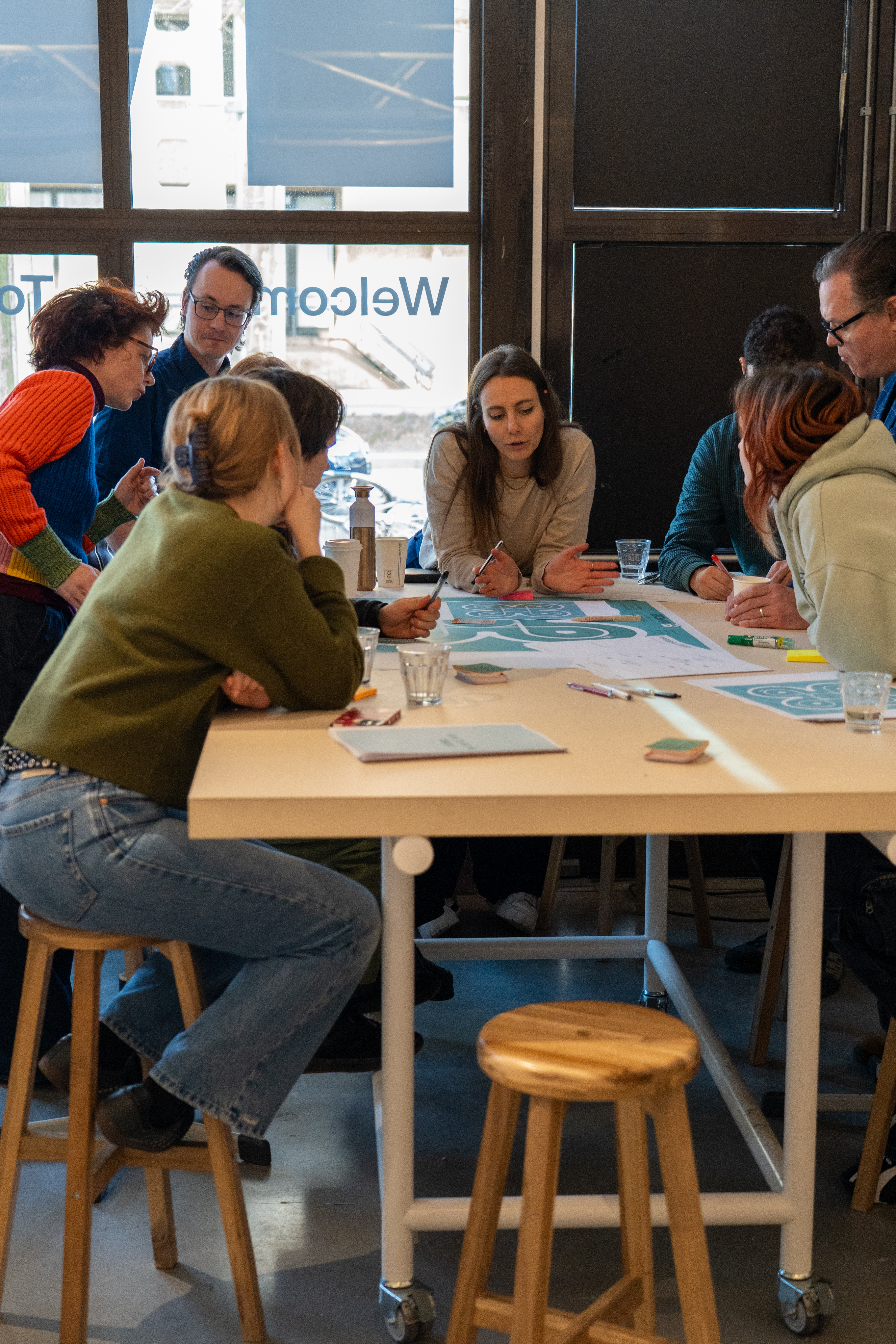
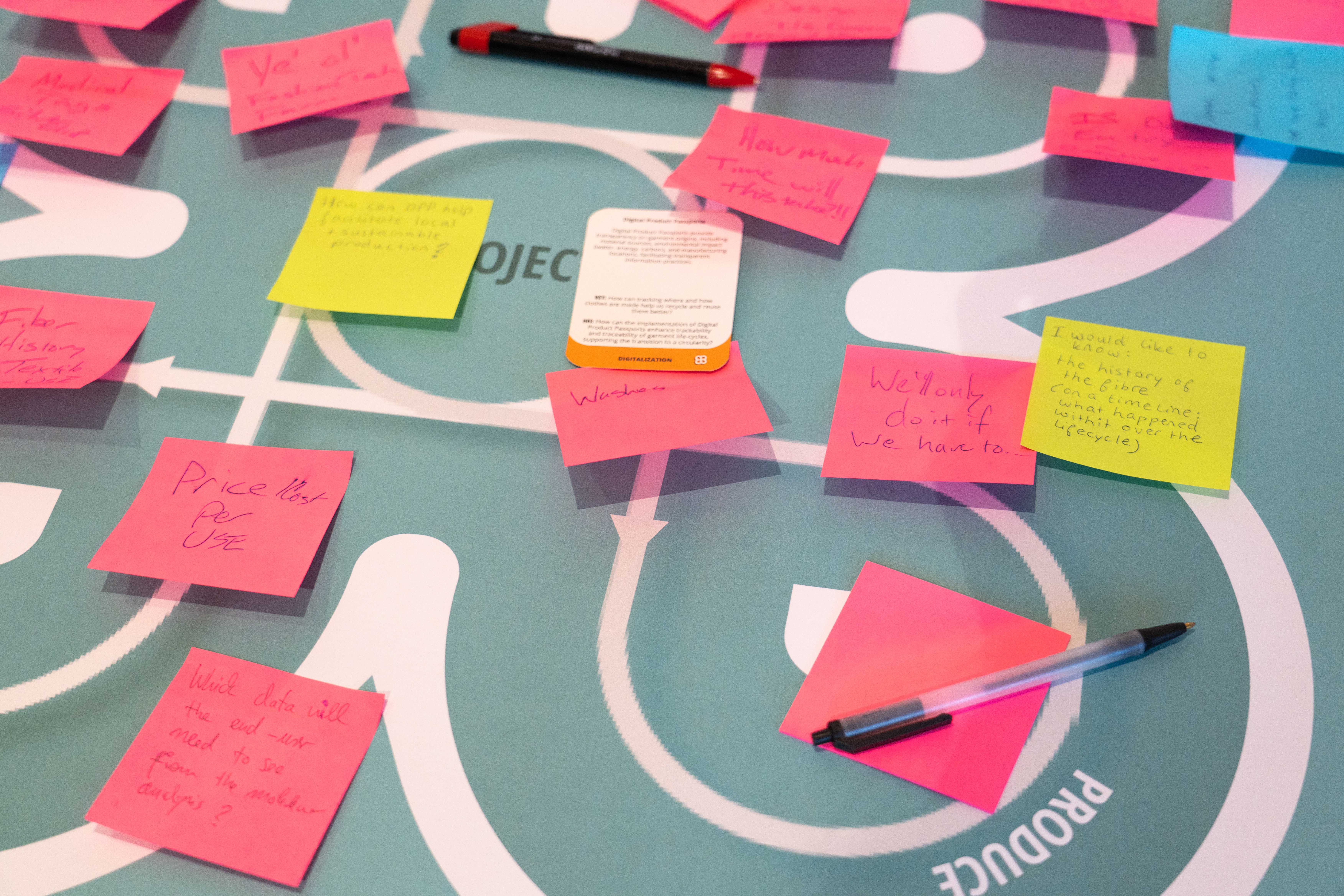
The second session moved from context-setting to co-design. Held in person at New Order of Fashion in Eindhoven, this Discovery Workshop focused on collecting and prioritising concrete system requirements for the M-DPP, grounded in the day-to-day reality of fashion and textile SMEs. Participants worked in breakout groups using the Loopholes stakeholder canvas to map their wants, needs, and concerns.
The session also included a presentation of the NewTexEco white paper on systemic value chain transformation in the textile, clothing, leather and footwear sector. Key themes from the discussion: where material and yarn data should originate, who owns and verifies it, what should stay confidential, and where DPPs can create genuine value beyond regulatory compliance.
Final session — Compliance themes and shared findings
Online · 13 April 2026 · 10:00–11:30
The final workshop brought together the insights gathered across the Living Lab series and presented findings from the broader stakeholder research. The session was structured around the five ESPR Phase 1 compliance themes for 2027. Participants contributed input collaboratively on a shared Miro board.
Several key tensions emerged clearly. On composition and chemical safety: data exists, but verification processes are too opaque and costly. On traceability: the transparency DPPs require sits in direct conflict with the confidentiality many business relationships depend on. On recyclability: participants proposed an index or score over a binary label. On packaging: regulatory attention was seen as disproportionate to actual environmental impact. On environmental footprint: precise data across all supply chain tiers is unlikely to be achievable by 2027 — country-level disclosure was identified as a practical starting point.